Project Detail
Yarn Connector NPI: Smart Textiles
Led connector NPI for conductive yarn integration into electronics systems. Developed 3 prototypes through SolidWorks, 3D printing, and design review cycles, two of which advanced into the Papyrus II product.
At a glance
Skills & tools
Outcome
3 prototypes developed and validated. 10 concepts down-selected to 3. Two connector designs advanced into the Papyrus II product program.
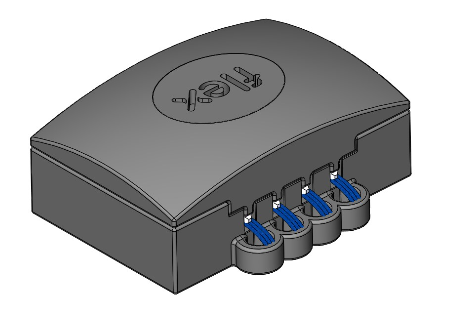
Custom Connector 1
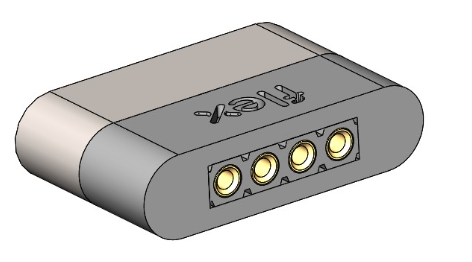
Custom Connector 2
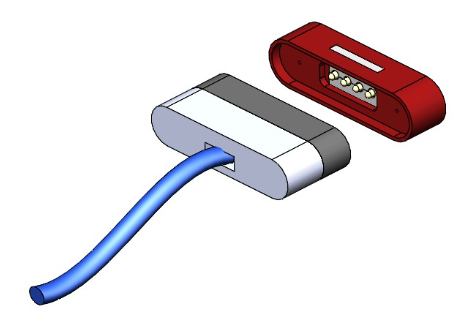
Custom Connector 3
SolidWorks CAD renders of three connector prototypes developed during NPI.
Disclosure: Connector specifications, supplier details, and product identifiers have been withheld in line with confidentiality obligations. Images shown are CAD and 3D-printed prototype renders only. No proprietary product detail is visible. All outcomes stated are directionally accurate.
Overview
The objective of this project was to develop custom connectors that could reliably integrate conductive yarns into electronics systems. This was a technically novel challenge that required blending textile-side constraints with electromechanical design requirements.
This was the first full NPI project I owned end to end. I started from scratch: researching textile and electrical systems, defining product requirements, generating concepts, down-selecting through structured evaluation, and delivering functional prototypes through an iterative design cycle.
The Problem
No off-the-shelf connector met the dual requirement of interfacing with conductive yarn on one side and conventional electronics on the other, while remaining manufacturable, compact, and easy to assemble. The team needed to develop its own solution.
Key constraints:
- Ease of manufacture and assembly
- Minimal footprint, with compactness as a hard requirement
- Simplicity of interface on both the textile and PCB sides
- Mechanical robustness sufficient for real-world use cycles
Approach
I opened with a broad ideation phase, generating ten distinct connector concepts across different form factors and interface strategies. Each concept was evaluated against the core constraints: manufacturability, simplicity, and compactness.
From ten, I down-selected to three candidates that best balanced all constraints. Each of the three was developed into a functional prototype using SolidWorks for geometry definition and 3D printing for rapid physical evaluation.
Design Review
After the three prototypes were developed and validated against requirements, I led a formal design review with 23 attendees, including stakeholders from engineering, manufacturing, and program management. The review covered:
- Concept rationale and trade-off analysis
- DFM/DFA considerations for each design
- TRL/MRL level assessment per concept
- Assembly process documentation
- Key accomplishments and open risks
- Recommendations for the next phase
The documentation package included full technical write-ups, assembly procedures, and future development recommendations. The package was structured to be passed to a downstream team or program.
Verification Thinking
Rather than informal bench tests, I approached evaluation with explicit verification framing: defining what mechanical and electrical behaviors needed to be confirmed, and what pass/fail criteria would provide confidence before advancing a concept.
This included:
- Contact resistance checks on yarn-to-connector interfaces
- Assembly cycle testing to confirm retention behavior
- Dimensional checks against tolerance targets from DFM review
Outcome
Two of the three developed connector designs were selected to advance into the Papyrus II program, an active product development effort, validating that the NPI process had produced concepts of real downstream value, not just paper prototypes.
10 → 3
Concepts Down-Selected
23
Design Review Attendees
2 of 3
Advanced to Papyrus II
Skills Applied
- Product Development: full NPI cycle from requirements through prototype delivery
- Rapid Prototyping: SolidWorks modeling into physical 3D-printed iterations
- 3D Modeling: geometry development across multiple connector form factors
- Electromechanical Design: interface design bridging textile conductive yarn and PCB electronics
- Technical Documentation: TRL/MRL assessments, assembly procedures, design review packages
Lessons Learned
This project taught me that NPI is as much about the process as the output. Starting with ten concepts and systematically narrowing to three forced rigorous trade-off thinking early, before any tooling or commitment was made. The formal review structure also reinforced how important structured documentation is when design decisions need to survive handoff across teams and programs.