Project Detail
Badge Reel Redesign: A Systems Approach
A product design challenge: take a commodity badge reel, identify why it fails, and engineer a better one. Covered competitive teardown, 4 progressive design concepts, full spring specification, manufacturing process, COGS analysis, and a V&V test plan. Recommended solution brings end-of-stroke snap speed from 4.4 m/s down to effectively zero.
At a glance
Skills & tools
Outcome
Snap-back speed reduced from 4.4 m/s to ~0 m/s in recommended concept. 4 design iterations developed. Full spring spec, COGS breakdown, and V&V test plan delivered.
Key outcomes
4.4→0
m/s
Snap-back speed in recommended design
4
Progressive design concepts developed and evaluated
50K+
Rated cycle life at FOS 5.1 on spring spec
$1.00
COGS at 500K units for recommended concept
Skills applied
Context: This was a take-home product design challenge. The brief was to redesign a retractable badge reel with a focus on durability, user experience, and eliminating snap-back. I treated it as a real product engineering problem: research, teardown, requirements, four design iterations, full calculations, manufacturing spec, and a test plan.
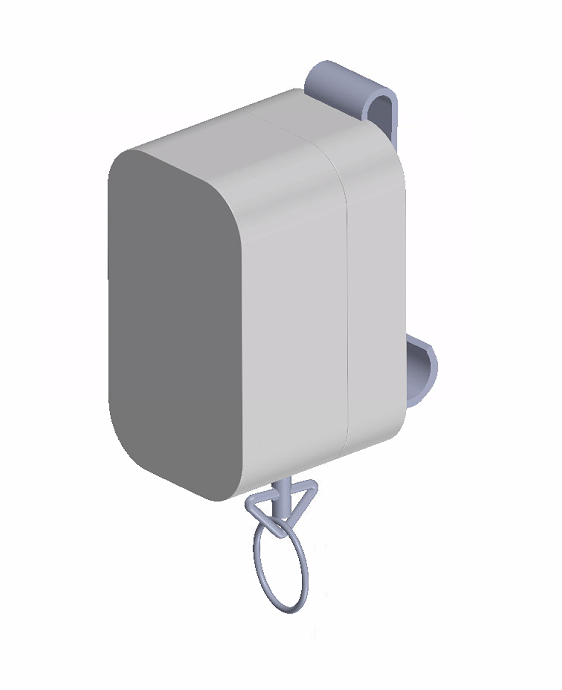
Assembled isometric render
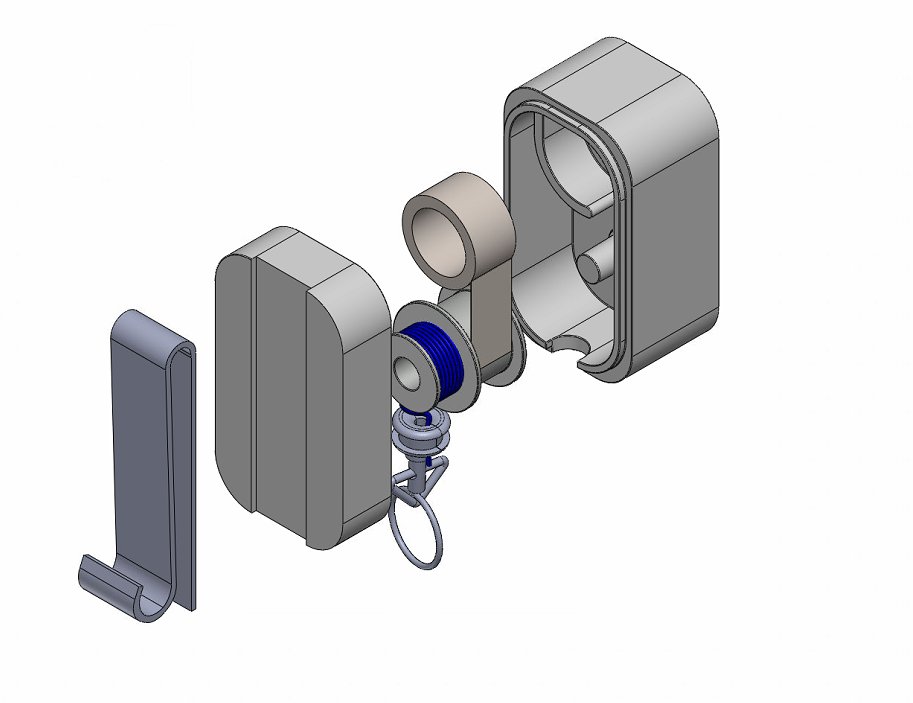
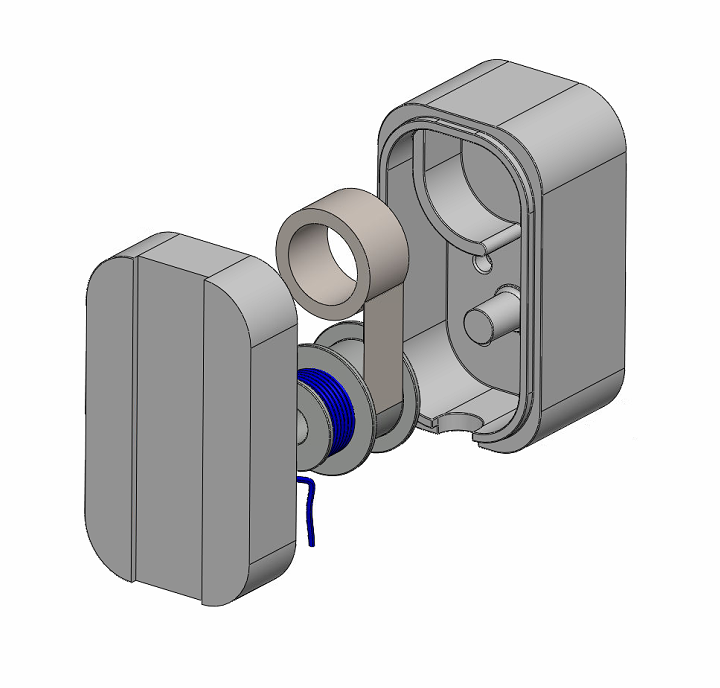
Exploded view. Housing, spool, spring, cord, clip, grommet.
The problem
Six failure modes. One root cause.
Badge reels fail in predictable ways. I mapped six failure modes and ranked them by severity before touching any CAD. The most critical: snap-back. When a clock spring releases, the cord returns at 4 to 5 m/s. That is the cord acting as a hammer, and it is responsible for almost every downstream failure mode: fraying, fatigue, jamming, and user dissatisfaction.
Very high severity
Snap-Back
Cord returns at 4 to 5 m/s, hammering the housing and stressing every downstream component
High severity
Cord Fraying & Spring Fatigue
Typically fail at 10 to 15K cycles under standard clock spring designs
Medium severity
Jamming & Overload
Spool float in ABS housings causes misalignment under repeated use
Competitive teardown
I tore down units across three market tiers: budget, mid-range, and heavy-duty. All six failure modes were confirmed through physical disassembly. Budget units use thin ABS housings and commodity clock springs with no end-stop. Heavy-duty versions add more material but not better physics.
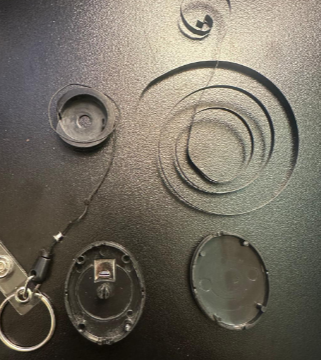
Budget tier, disassembled
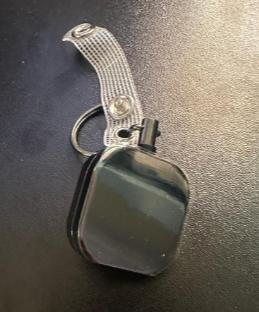
Mid-range tier
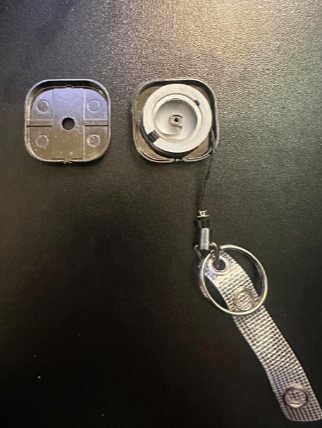
Heavy-duty tier, disassembled
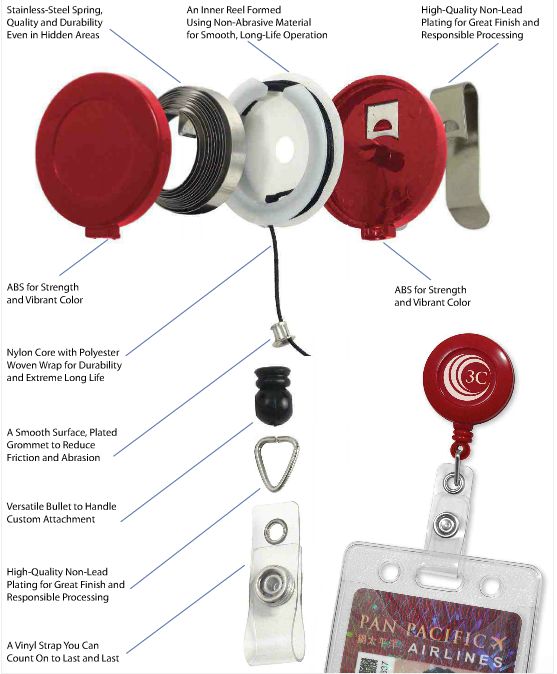
Budget unit teardown, components labeled
Heavy-duty unit teardown, components labeled
Key decision
Clock spring vs. constant force spring
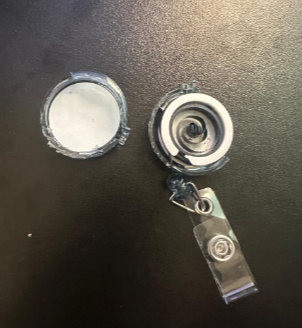
The clock spring is the root cause of snap-back. At full extension it stores maximum elastic energy and releases it as a sharp 2 to 3 times force spike. A constant force (CF) spring eliminates that spike: it delivers the same retraction force at any extension length. Switching spring type alone drops snap speed by 19%.
This was the single most important design decision. Every concept that followed was built on a CF spring foundation.
Clock spring inside a disassembled badge reel. Stores peak energy at full extension.
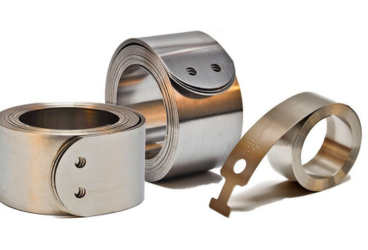
Constant force spring. Flat force profile across full stroke.
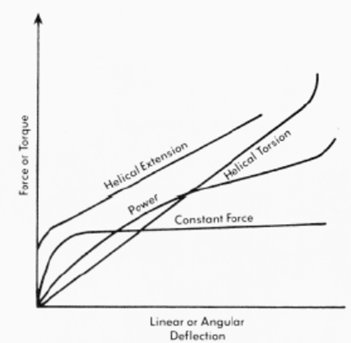
Force-deflection profiles compared. CF spring eliminates the peak force spike.
Spring specification
Fully calculated: 301 stainless steel, t = 0.08mm, w = 5.58mm, designed for 120g load at 600mm cord length. FOS = 5.13. Stress ratio = 19% of yield. Rated for 50K+ cycles and 5 to 6 year service life. All constraints verified.
Four concepts
Each layer adds one more damping mechanism
Rather than jumping to a final solution, I built each concept as an additive layer on top of the last. Every iteration was evaluated against snap speed, BOM complexity, and cost impact.
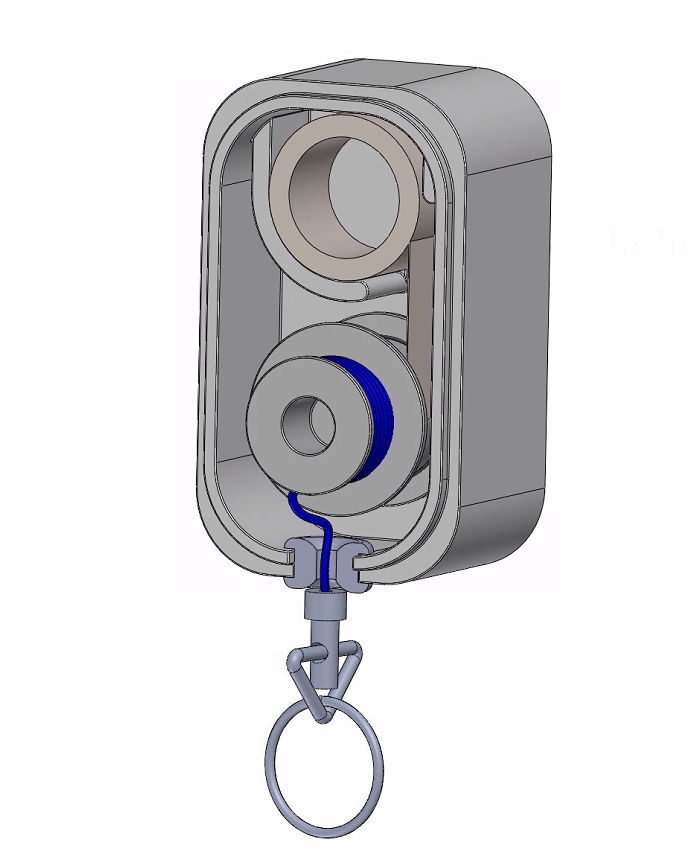
D1
CF Spring + A380 Spool
3.54 m/s. Down 19% from baseline. Die-cast spool adds inertial braking. +$0.25/unit.
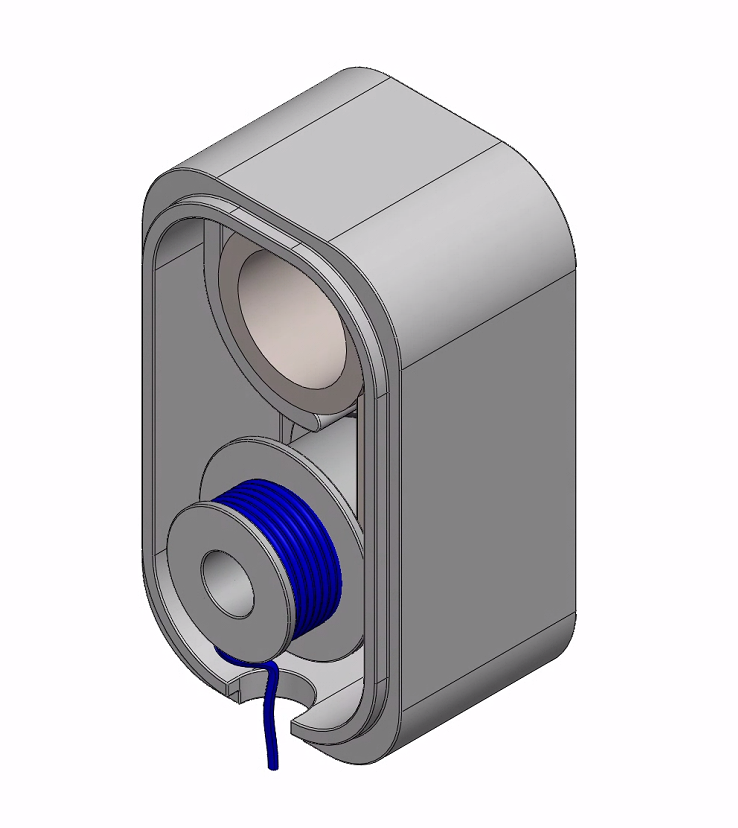
D2
D1 + TPU Gasket
2.29 m/s. Down 48%. TPU over-moulded onto spool adds full-stroke friction. Zero extra BOM parts. +$0.29/unit.
D3, Recommended
D2 + Bumper Spring
Effectively 0 m/s at end-of-stroke. OTS compression spring absorbs final 8 to 10mm. Three independent damping layers. +$0.30/unit.
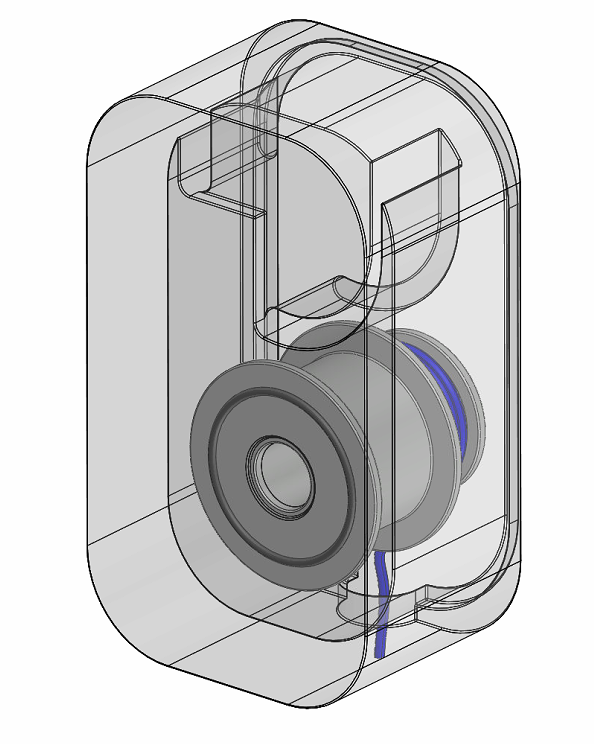
D4, Premium SKU
Eddy Current Brake
~1.2 m/s terminal velocity. 4 neodymium magnets, Lenz’s Law braking, zero contact wear. Self-regulating. +$0.75/unit.
Recommended
D3: Three independent damping layers
D3 stacks three mechanisms that each work independently, so if one is slightly off-spec, the others still absorb the energy. The CF spring controls the retraction profile throughout the stroke. The TPU gasket adds consistent friction across the full pull length. The bumper spring at the last 8 to 10mm catches whatever energy remains and brings the cord to a complete stop.
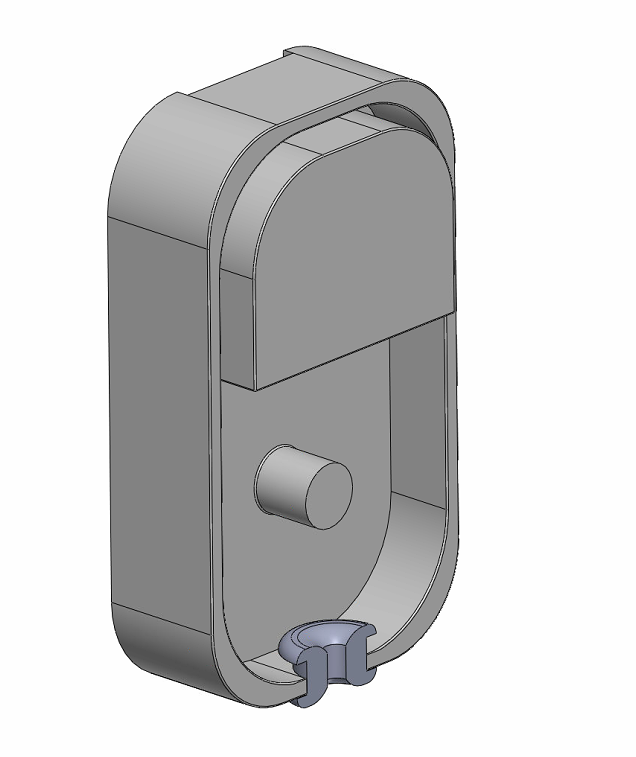
D3 assembled. Final form factor.
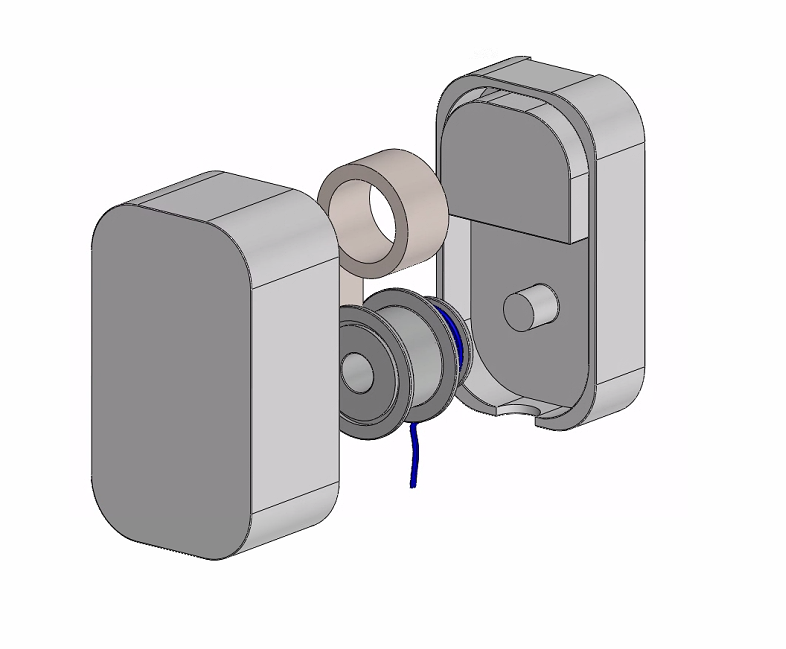
D3 exploded. CF spring, spool, TPU gasket, bumper spring.
Snap-back speed, all concepts compared
Peak retraction speed at full cord extension. Lower is better.
m/s peak retraction speed
v = V12 F L/ms · 120g payload · 600mm stroke · CF spring 1.3GN · First-principles derivation · Validated against teardown observation · Speed to be verified during V&V
Why D3 over D4
D4 (eddy current brake) delivers better absolute snap speed but at 2.5 times the cost delta and higher tooling complexity. D3 solves the problem for a $0.30 premium per unit and is the right standard-product answer. D4 was recommended as a premium SKU only, where the performance story justifies the price point.
Manufacturing
Process and cost
Every component was specified with a manufacturing process, material, and cost estimate at 100K and 500K unit volumes. The design was deliberately kept manufacturable with no exotic processes: the two most challenging parts (housing and spool) both use well-established high-volume methods.
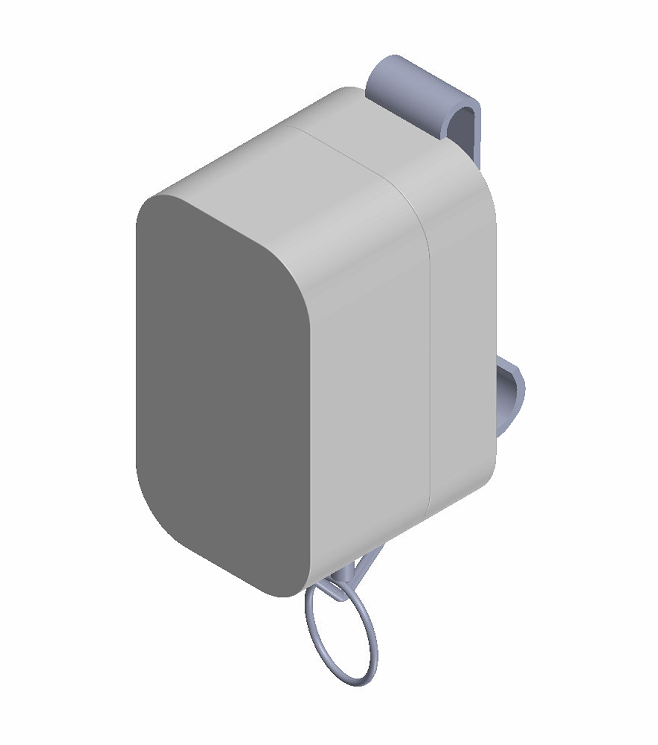
Component 1
Housing
2-shot injection moulding. ABS outer shell, TPU bumper overmould. Single tool, no secondary ops.
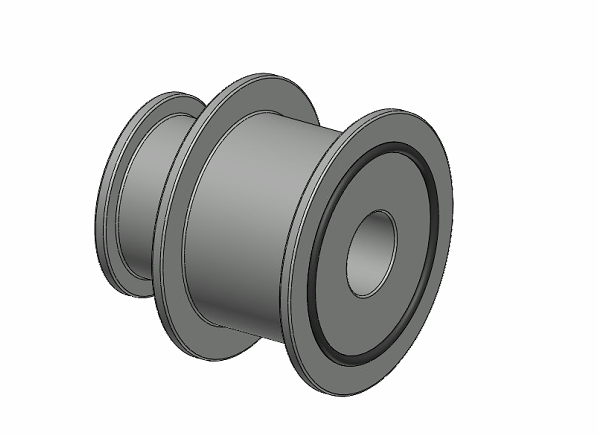
Component 2
Spool + TPU Gasket
A380 die-cast spool. TPU gasket over-moulded onto spool face in same tool cycle. Zero extra BOM line.
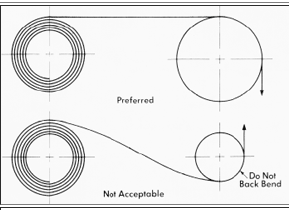
Component 3
CF Spring
301 SS, precision roll-formed. t = 0.08mm, w = 5.58mm. Standard vendor process, no custom tooling required.
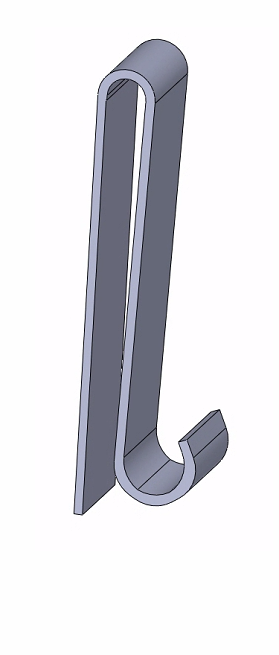
Component 4
Belt Clip
304 SS, progressive die stamp. Consistent geometry across all four concepts. Snap-fit into housing, no fasteners.
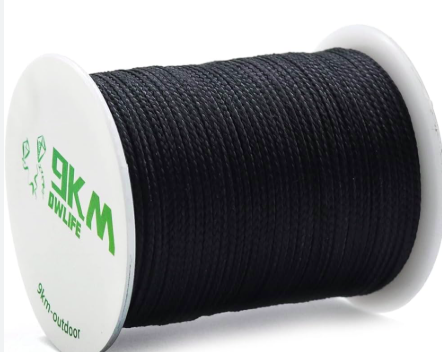
Component 5
Retraction Cord
Kevlar-braided, 600mm deployed length. Rated to 80 lb tensile. Fraying eliminated with crimp ferrule at anchor point.
Component 6
Bumper Spring + Grommet
OTS compression spring, zinc-plated steel. Absorbs final 8 to 10mm of stroke. Nylon cord grommet prevents cord notching at exit point.
$1.24
Total COGS at 100K units
$1.00
Total COGS at 500K units
35×22×21
Final dimensions (mm)
V&V
Test plan
A three-phase V&V plan was defined to validate D3 before committing to production tooling. Each phase gates the next: no progression without pass on all criteria.
Phase 1: Build & Assemble
Procurement
- FDM print housing and spool (PETG, 0.2mm layer)
- Source 301 SS CF spring to spec from vendor
- Source TPU sheet for gasket (Shore 60A)
- Source Kevlar cord (600mm, 80 lb rated)
- Source OTS bumper spring (k = 0.8 N/mm, 10mm free length)
Assembly checks
- Full assembly, 3 units minimum
- Visual check: no cord binding or spool misalignment
- Manual pull-and-release: smooth full-stroke retraction
- Housing snap-fit engagement confirmed
Phase 2: Baseline Characterization
Force & dimension
- Pull force at 100mm, 300mm, and 600mm extension
- Force flatness check: max 15% deviation across stroke (CF spring spec)
- Envelope dimensions verified against 35×22×21mm spec
- Spool axial float measured (target: under 0.3mm)
Supplier alignment
- Review spring vendor tolerance callouts (t, w, curl radius)
- Confirm FOS margin holds at worst-case tolerance stack
- TPU gasket compression set check after 500 cycles
- Document all deviations, update spec if needed before Phase 3
Phase 3: Performance Validation
Snap speed & fatigue
- 240fps high-speed camera: snap speed at end-of-stroke
- Pass criterion: cord impact velocity under 0.5 m/s
- Cyclic fatigue test: 10K, 25K, and 50K pull-retract cycles
- Inspect after each milestone: fraying, spool wear, spring set
- Pass criterion: no functional failure through 50K cycles
Structural & environmental
- Cord tensile test: ramp to 80 lb rated load, hold 30s, no failure
- Drop test: 1.5m onto concrete, 6 orientations, housing integrity
- Temperature soak: retraction force check at -10°C and 60°C
- UV exposure: 200hr, check TPU gasket and ABS housing for degradation
- Final report: all pass/fail against requirements, sign-off before tooling